Concrete Block Retaining Walls vs Concrete Sleepers: Which Material Is Right for Barossa Properties?
Choosing the right retaining wall material is one of the most practical decisions property owners face. This guide covers the key differences between concrete block retaining walls in Barossa and concrete sleepers to help you decide.
Many Barossa properties sit on sloped ground, and the region's soil profile adds complexity. The valley floor carries sandy loams over red clays, while other parts of the region feature dispersive brown clays with poor drainage. Getting your wall material wrong can mean cracking, bowing, or outright failure within a few years.
How the Two Materials Are Structurally Different
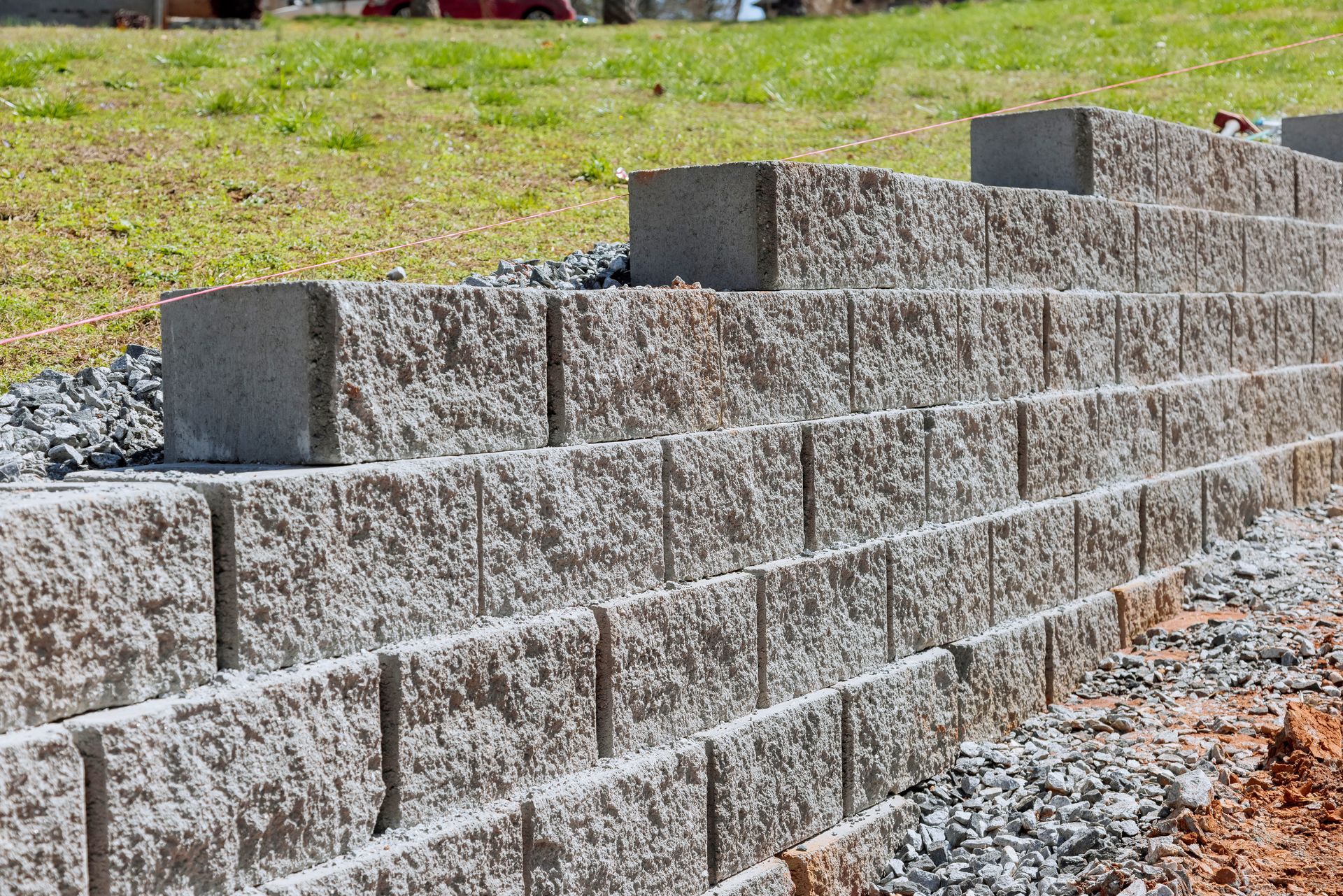
Concrete retaining walls are built by stacking individual units course by course, often interlocking. The wall uses gravity and mass to resist soil pressure from behind. Segmental block walls can lean back slightly with each course, helping them stay stable under load.
Concrete sleepers are precast panels dropped horizontally between steel posts set into the ground in concrete. The posts carry the structural load, and the sleepers span between them. This system handles tall drops in ground level well but relies on those steel posts maintaining their integrity over time.
Which Material Suits Barossa's Soils and Slopes?
Barossa's clay-heavy soils expand when wet and shrink when dry, creating pressure cycles that stress retaining structures. When water builds up behind a wall in reactive soil, it adds significant lateral pressure.
Concrete sleepers perform well on reactive clay sites because the post-and-panel system can be engineered for high lateral loads. For steep slopes and taller walls, sleepers are often the stronger structural choice.
Concrete block retaining walls offer flexibility on moderately sloped properties. They can follow curved lines and accommodate changes in direction, suiting the varied topography around Nuriootpa, Tanunda, and Angaston. Block walls can work on clay-dominant soils but may require engineered drainage and footing systems to perform reliably long term.
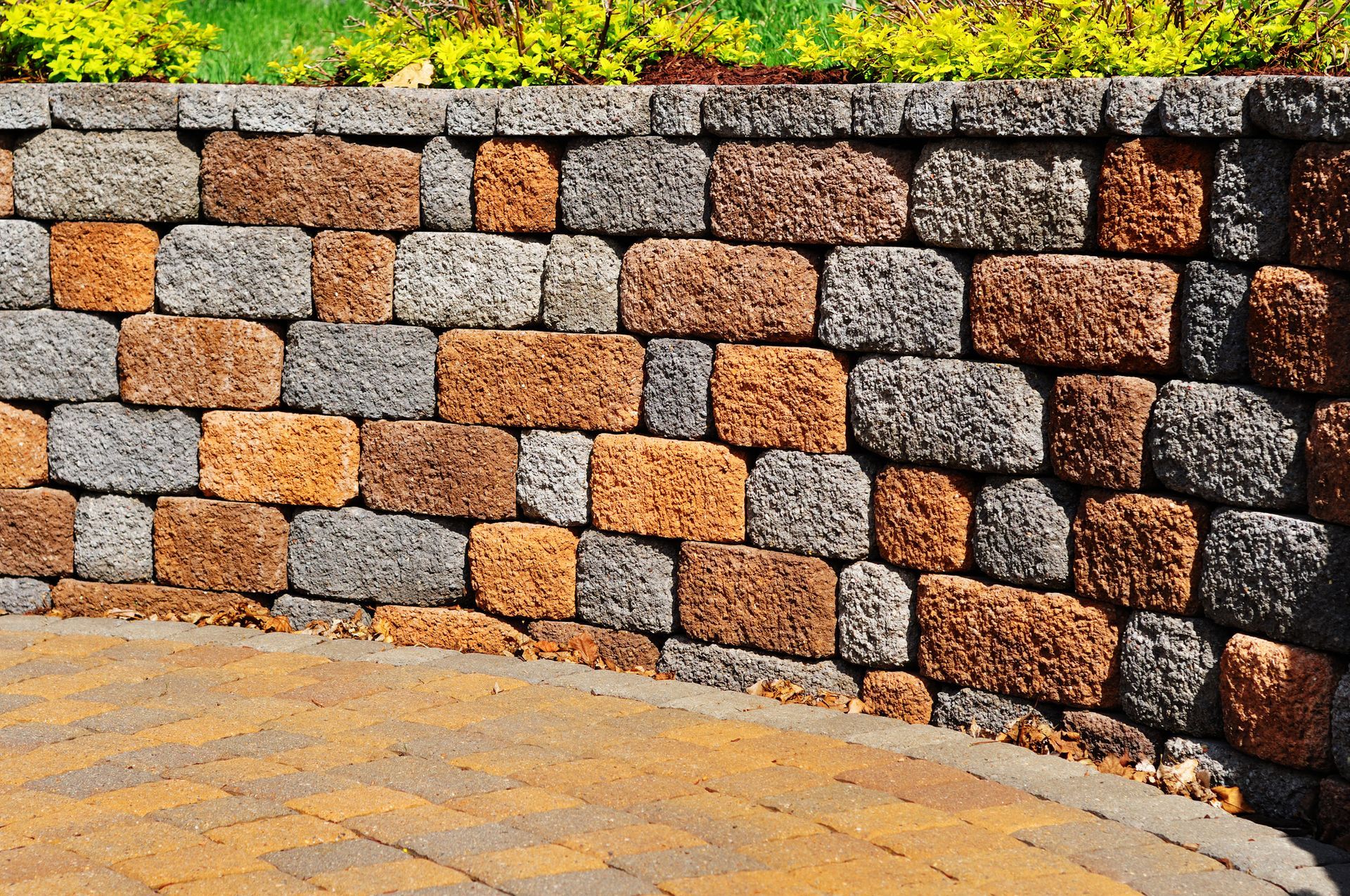
In short, concrete block walls use stacked interlocking units, while concrete sleepers use precast panels set between steel posts. Block walls suit moderate clay sites with proper drainage preparation, whereas sleepers handle reactive clay and steep slopes. Blocks offer high design flexibility for curved and stepped layouts, while sleepers are mostly limited to straight runs. Block walls typically last 30 to 50 years, and sleepers can reach 50 years or more. Block installation is more manageable thanks to its modular build, while sleepers often require heavy equipment. For drainage, block walls need gravel backfill and weep holes, and sleepers need a pipe with free-draining backfill. Finally, blocks come in a wide range of colours and textures, while sleepers have a limited colour range that can fade over time.
Drainage Considerations for Both Systems
Poor drainage is the leading cause of retaining wall failure. When soil becomes saturated, hydrostatic pressure builds behind the wall and pushes it outward.
Both systems require appropriate drainage. Typical solutions include a slotted agricultural pipe at the base combined with free-draining gravel or scoria backfill. Concrete block retaining walls can also incorporate weep holes to allow water to escape before pressure builds.
In Barossa, this step cannot be skipped. Areas around Lyndoch and the lower valley floor experience significant winter rainfall after dry summers, meaning soil moisture shifts dramatically across seasons. A wall without proper drainage may perform fine initially, then begin to fail as moisture cycles compound.
Cost Considerations
Neither material is universally cheaper. The real question is value over time.
Concrete block systems may involve lower upfront material handling costs. Blocks are modular and manageable, which can reduce labour time on straightforward projects. They also suit staged construction, common across larger rural lifestyle blocks in the Barossa.
Concrete sleepers involve higher installation effort due to the weight of individual panels and the need to bore and concrete post holes. Their longevity and low maintenance needs can make them competitive over a longer time frame. Neither option should be chosen purely on perceived short-term savings, and both need correct installation to last.
When Should You Call a Professional?
Any retaining wall over one metre in height typically requires council approval and engineering certification throughout South Australia, including the Barossa region. Walls supporting driveways, structures, or slopes carrying heavy loads may need professional engineering input regardless of height.
Can Concrete Block Retaining Walls Be Built as a DIY Project?
Smaller concrete retaining walls under one metre can sometimes be a DIY project. However, anything taller, or any wall on clay-heavy or sloped ground, is best handled by a professional. Incorrect base preparation and poor drainage are the two most common causes of early wall failure.
Which Material Is Better for Curved Layouts?
Concrete block walls offer far more design flexibility for curved garden terracing and stepped landscaping. Concrete sleepers are generally limited to straight or near-straight runs, better suited to boundary walls and straight cut-and-fill situations.
How Long Will Each Type Last in the Barossa Climate?
With proper installation and drainage, concrete sleepers can last 50 or more years. Concrete block walls typically last 30 to 50 years, depending heavily on soil conditions and drainage quality. Hot, dry Barossa summers followed by cooler, wetter winters can accelerate deterioration in walls not built with drainage as a priority.
Get the Right Concrete Block Retaining Walls Advice Today
Choosing between concrete block retaining walls and concrete sleepers comes down to your block's slope, soil type, and how you plan to use the space. There is no universal answer, and the wrong choice for your specific site can be costly to fix.
Bazza's Fencing serves the region with experience across both material types. The team can assess your site and recommend the right approach before any digging starts. Visit the retaining wall services page to learn more. When you're ready to talk through your project, get in touch with the team or call 0418 802 032.
You can also find and review Bazza's Fencing on Google to read what other property owners have said.
Retaining Wall Installation in the Barossa Valley: Choosing the Right Materials for Local Conditions